
Key takeaways
- Federal regulators are tightening enforcement on driver licensing, training, documentation, and ELD compliance, causing real freight delays when drivers are placed out of service mid-route.
- Nearly half of U.S. truck-driving schools face decertification after a DOT review found widespread non-compliance and falsified records. Poorly trained drivers are more likely to fail inspections or lose CDL eligibility. Source: Fortune/AP
- FMCSA revoked five additional ELD models (20+ this year), forcing carriers to revert to paper logs and risking violations for “no record of duty status.” Source: FMCSA
- States are being audited for issuing improper CDLs, especially non-domiciled licenses issued without proper verification. Several states may be forced to revoke thousands of licenses. Source: OHS Online
- English-language proficiency requirements are being enforced more strictly, leading to more out-of-service placements when drivers cannot communicate with law enforcement. Source: FMCSA
- USPS contractor disruptions showed how quickly freight networks collapse when driver eligibility rules change overnight. Source: FreightWaves
- When a driver is placed out of service for any of these issues, freight stops moving — often roadside — resulting in missed appointments, temperature-control risks, detention costs, and customer-facing delays.
A brief introduction
If you work in transportation, you’ve seen the usual causes of delay: weather, breakdowns, tight capacity, and occasional human error. But a different kind of disruption has been happening quietly across the industry that many shippers still don’t realize can derail their freight mid-route:
Over the past year, the Department of Transportation (DOT), FMCSA, and the Department of Homeland Security have intensified enforcement of driver licensing, training, ELD compliance, and non-domiciled driver credentialing.
The result is simple but serious: Loads are being delayed or stranded because drivers, schools, or carriers are failing compliance checks — sometimes after your freight is already on the road.
Here, we quickly break down the enforcement changes in plain English, what they mean for your supply chain, and the questions every shipper should be asking their logistics partners right now.

Enforcement is tightening across multiple fronts, and shippers are feeling it
Over the past 18–24 months, federal agencies have launched an unprecedented multi-layered crackdown on:
- Illegally issued or improperly vetted CDLs.
- Drivers who cannot meet federal English-language requirements.
- Carrier safety practices and documentation.
- ELD (electronic logging device) compliance.
- Fraudulent or substandard truck-driver training schools.
Each of these areas individually can take a truck off the road. Together, they create a perfect storm. Below are the most important developments shippers need to understand.
What makes these enforcement actions especially disruptive is that many of the failures don’t surface until a roadside inspection — after a load is already in motion.
Here's what's going on:
|
|
|
|
Why these crackdowns matter directly to shippers
Every one of these enforcement actions leads to one outcome when a driver is stopped: Your load sits still.
Here’s what this means in practical terms:
- Missed appointments and cascading downstream delays. Retailers and manufacturers often penalize late arrivals.
- More detention and layover charges. Carriers may pass costs back to you, the shipper.
- Temperature-controlled freight risks spoilage. We don’t have to tell you that even short delays can cause loss.
- Freight may be stranded roadside until a compliant driver arrives. This can take hours or days, depending on the location.
- Liability becomes murky. Especially if a driver’s training or credentialing is later found invalid.
- Your customer experience suffers. Even if it’s not your fault, you’re the one who has to explain the delay.
The federal rules that often get drivers placed OOS
Drivers get sidelined when they fail one of a handful of core federal requirements. Here’s what each rule actually means in practice and why it matters to your freight.
1. Valid CDL with the correct endorsements
A driver must hold an active, valid Commercial Driver’s License (CDL) and the appropriate endorsements for the vehicle and cargo they’re hauling. Read the full rule here.
Endorsements include:
|
CDLs must be properly issued by the state, not expired, and matched to the class of vehicle (A, B, or C). Now here’s why drivers get taken out of service:
- Their endorsement doesn’t match the load (e.g., hazmat without an H endorsement)
- Their CDL expired, was suspended, or was revoked
- CDL issued improperly (see non-domiciled driver rule below)
If the endorsement doesn’t match the cargo — even if the load is already in transit — the driver is immediately prohibited from moving the truck any farther.
2. English-language proficiency (49 CFR 391.11)
Drivers must be able to read and speak English well enough to understand road signs, converse with law enforcement, make entries on required reports and records, and follow verbal instructions related to the vehicle or cargo.
If a driver cannot communicate effectively with a DOT officer during an inspection, they may be disqualified on the spot because the officer cannot confirm understanding of instructions or safety-related information. This is one of the fastest-growing reasons drivers get pulled OOS — and one that shippers typically never hear about directly, even though it stalls their freight.
3. Properly vetted non-domiciled driver credentials
Non-U.S. citizens are allowed to operate commercial vehicles if they:
- Are legally authorized to work in the U.S.
- Hold a CDL issued by a state that properly verified identity, lawful presence, work eligibility, and licensing history.
Federal investigations and compliance reviews have identified cases where CDLs were issued without proper verification of work authorization or licensing eligibility. CDLs issued improperly may be revoked or flagged.
If a roadside inspection reveals that a CD was issued beyond a driver’s work authorization, without proper state verification, or later deemed invalid by the state or FMCSA, the driver can be removed from service immediately.
An improperly vetted CDL doesn’t show up until enforcement checks it — usually while the freight is already on the road. Loads get stranded through no fault of the shipper.
4. Active medical certification
Per FMCSA, drivers must carry a valid Medical Examiner’s Certificate (MEC) proving they meet FMCSA’s physical qualifications. Carriers must also ensure the medical certification is kept up to date in the state record.
Common issues that take drivers out of service here typically include:
- Expired medical card
- Card not entered correctly into the state database
- Incomplete documentation
- Driver unable to provide proof at inspection
This is one of the simplest — but most common — compliance failures. A simple paperwork lapse can shut down a load.
5. Compliance with Hours-of-Service (HOS) rules and use of an approved ELD
Drivers must follow federal limits on driving and rest time and must record their hours electronically using an FMCSA-approved Electronic Logging Device (ELD). FMCSA recently revoked multiple ELD models that no longer meet federal requirements. If a driver is using one of these devices:
- They must stop using it immediately.
- They must switch to paper logs until replaced.
- If not replaced within the allowed period, the driver can be cited and placed OOS for “no record of duty status.”
This is considered one of the most serious violations! A revoked or non-functioning ELD can put a truck out of service even if the freight is moving on time and safely. Carriers that cut corners on technology expose shippers to unpredictable delays.
The bottom line for shippersIf a driver fails any of the compliance requirements above, enforcement officers can — and regularly do — place them out of service immediately. That means:
|
What we do to protect shippers from these risks
Many carriers and brokers say they vet for compliance, but few explain how. Because of the increasing federal scrutiny on CDL issuance, training quality, English-language proficiency, and ELD compliance, both Badger Logistics (asset side) and Fall River Express (brokerage side) have elevated standards to prevent the exact types of problems now causing nationwide delays.
Here’s what that looks like in practice:
On the asset-based side (Badger Logistics)Badger Logistics operates its own fleet, meaning driver vetting, training, and compliance standards are fully controlled internally. We only hire experienced, proven drivers. Badger hires drivers with at least 2 years of professional driving experience. This means:
This requirement alone filters out many of the drivers most affected by the recent federal crackdowns on inadequate training. Samsara technology ensures top-tier ELD and visibility compliance. We use Samsara, one of the most respected platforms for FMCSA-compliant ELDs, HOS monitoring, in-cab cameras, and telematics/safety analytics. With multiple ELD models being revoked this year, using Samsara ensures our drivers are on a system not at risk of sudden decertification, a leading cause of out-of-service orders. We do in-person English-language screening. Every Badger driver is vetted in person to make sure they can communicate clearly with dispatch and enforcement officers, and they meet the functional expectations of FMCSA’s English-language regulation (49 CFR 391.11). All our company communications — dispatch, updates, safety coaching — are conducted in English. We have strict I-9 verification to ensure lawful work authorization. Badger follows strict I-9 documentation requirements to ensure every driver is a legally authorized U.S. worker, operating on a properly issued CDL, and not driving under a non-domiciled or improperly vetted license. This is directly relevant given recent federal investigations into states issuing CDLs without validating lawful presence. |
On the brokerage side (Fall River Express)Fall River Express brokers freight only to vetted, compliant carriers who can demonstrate consistent safety and reliability. We only work with carriers with established authority and strong FMCSA standing. Fall River requires carriers to have at least 1 year of operating authority, verified good standing with FMCSA, acceptable SMS/CSA scores and clean or manageable OOS and crash histories. Carriers with high-risk patterns are rejected. We look for updated contracts and properly verified insurance. Every carrier working with Fall River must have a signed carrier contract (renewed every 3 years), at least $100,000 in cargo insurance — with higher limits when required, and current auto liability coverage. Insurance is verified before use, with no exceptions. We use English-speaking drivers when requested. When English proficiency is relevant or required, Fall River ensures the assigned driver can communicate clearly—a key safeguard given the rise in OOS incidents linked to English-language enforcement. Fall River also uses third-party carrier vetting services to evaluate insurance status, safety history, FMCSA compliance, inspection data, and authority changes. We combine this with our team’s real-world industry knowledge to identify reputable carriers and avoid poorly vetted drivers, suspicious authority histories, revoked ELD issues, and CDL irregularities. And vetting doesn’t stop at onboarding. Carriers who fall out of compliance or show deteriorating safety performance are removed or suspended. |
The bottom line for shippers
The trucking industry is in the middle of one of the most aggressive compliance cleanups it has seen in years. Driver training programs are being decertified. ELDs are being revoked. CDL issuance is under scrutiny. English-language and documentation requirements are being enforced more consistently at roadside inspections.
When a driver fails a compliance check, the truck stops. And when the truck stops, your freight stops with it — often without warning, after a load is already in motion.
That’s why compliance can no longer be treated as a back-office carrier issue. For shippers, it’s a real operational risk that directly affects delivery timelines, customer commitments, and cost control.
At Badger Logistics and Fall River Express, we’ve built our asset-based and brokerage operations around one principle: problems that can be prevented shouldn’t be passed on to the shipper. From experienced driver hiring and in-person vetting on the asset side to rigorous carrier qualification and ongoing monitoring on the brokerage side, our goal is simple — keep compliant drivers on the road and your freight moving.
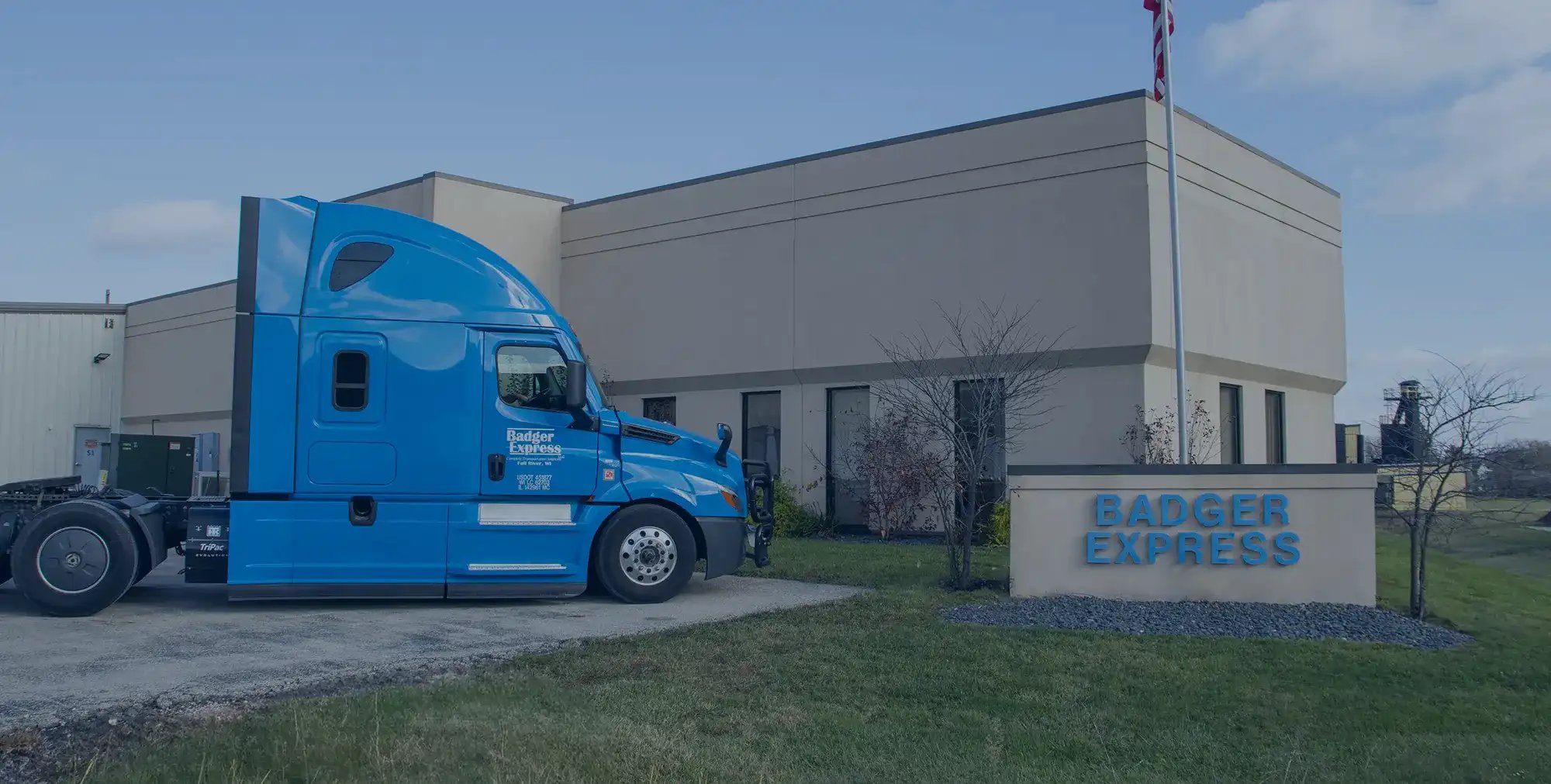
If you’re concerned about how recent enforcement changes could affect your freight — or you want a clearer view into how your loads are being protected today — let’s talk.
Contact us to learn how we help minimize risk and keep freight moving.